Riley Werner · 7 October 2026
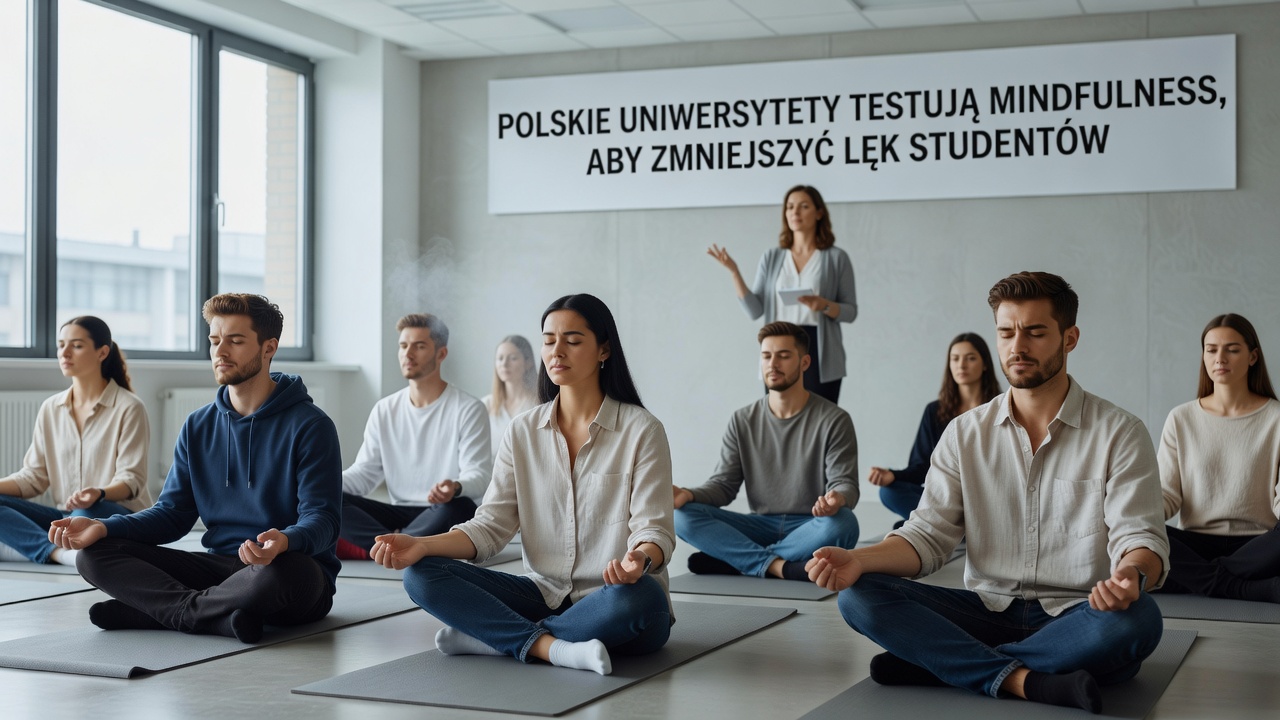
Polish universities are piloting mindfulness programs aimed at reducing elevated anxiety levels among students. Recent surveys indicate that nearly 45 percent of undergraduates report moderate to severe anxiety, a figure that has risen sharply since the pandemic. Institutions including the University of Warsaw, Jagiellonian University, and Adam Mickiewicz University have launched eight-week trials to test whether structured mindfulness training can deliver measurable relief. The programs teach daily meditation, breathing techniques, and present-moment awareness, with sessions integrated into existing student wellness offerings.
Program Structure and Early Results
Each trial consists of weekly 90-minute group sessions led by certified instructors, supplemented by guided audio exercises for home practice. Over 600 students have enrolled across the three sites, with participation tracked through attendance logs and optional app-based logging of practice time. Preliminary data collected after four weeks show average reductions of 18 percent on standardized anxiety scales among consistent participants. Physiological monitoring using heart-rate variability in a subset of volunteers supports these self-reported improvements. Universities are also examining academic performance metrics to determine whether lower anxiety correlates with better concentration and retention. Facilitators note strong initial engagement, though retention drops slightly after the fourth week, prompting adjustments to session scheduling and content variety.
Researchers emphasize that the trials follow strict ethical protocols approved by institutional review boards. Control groups receiving standard counseling services allow direct comparison of outcomes. Data collection includes demographic variables to assess whether benefits differ across fields of study or year groups.
Expansion Outlook and Limitations
University leaders plan to review full-year results before deciding on permanent rollout. If efficacy holds, the programs could extend to additional campuses and incorporate train-the-trainer models for faculty. Officials acknowledge challenges such as cultural unfamiliarity with mindfulness practices and limited staffing resources. Partnerships with specialized education providers are under discussion to support scaling while maintaining program fidelity. The trials remain focused on evidence gathering rather than immediate widespread adoption, with findings expected to inform national guidelines on student mental health support in higher education.