Alex Hayes · 15 November 2026
Regional App Analytics Reveal How Structured Calm Routines Influence Exam Prep Patterns Among Polish Vocational Learners
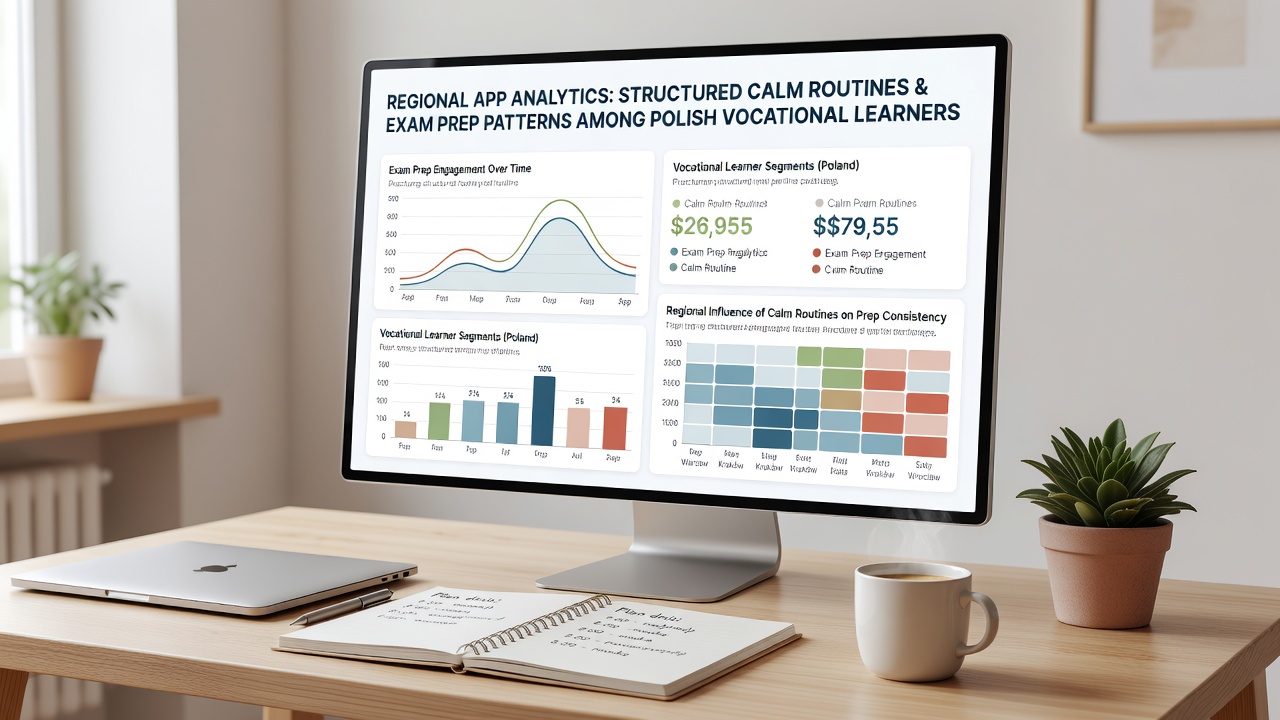
App analytics gathered across several Polish regions during late 2026 highlight measurable shifts in how vocational learners approach exam preparation when they incorporate structured calm routines into daily schedules, and these patterns emerged clearly in data compiled through November 2026. Researchers tracking user engagement on education-focused platforms noted consistent correlations between regular breathing exercises, guided mindfulness sessions, and adjustments in study duration along with retention rates. Vocational programs in technical fields such as mechanics, hospitality, and information technology supplied the bulk of the participant pool, allowing analysts to segment results by trade specialization and geographic cluster.
Data Collection Methods and Scope
Regional datasets combined anonymous usage logs from multiple mobile applications with self-reported study logs submitted by learners enrolled in vocational secondary schools, while cross-referencing these figures against official enrollment statistics released by Polish education authorities. Analysts examined activity spikes during typical exam windows in spring and autumn semesters, focusing on variables such as session length, time-of-day preferences, and sequence of calm activities relative to active revision blocks. The resulting sample covered learners from urban centers in Mazovia and Silesia as well as smaller towns in the Lesser Poland and Pomerania regions, producing a broad enough distribution to identify localized variations without relying on national aggregates alone.
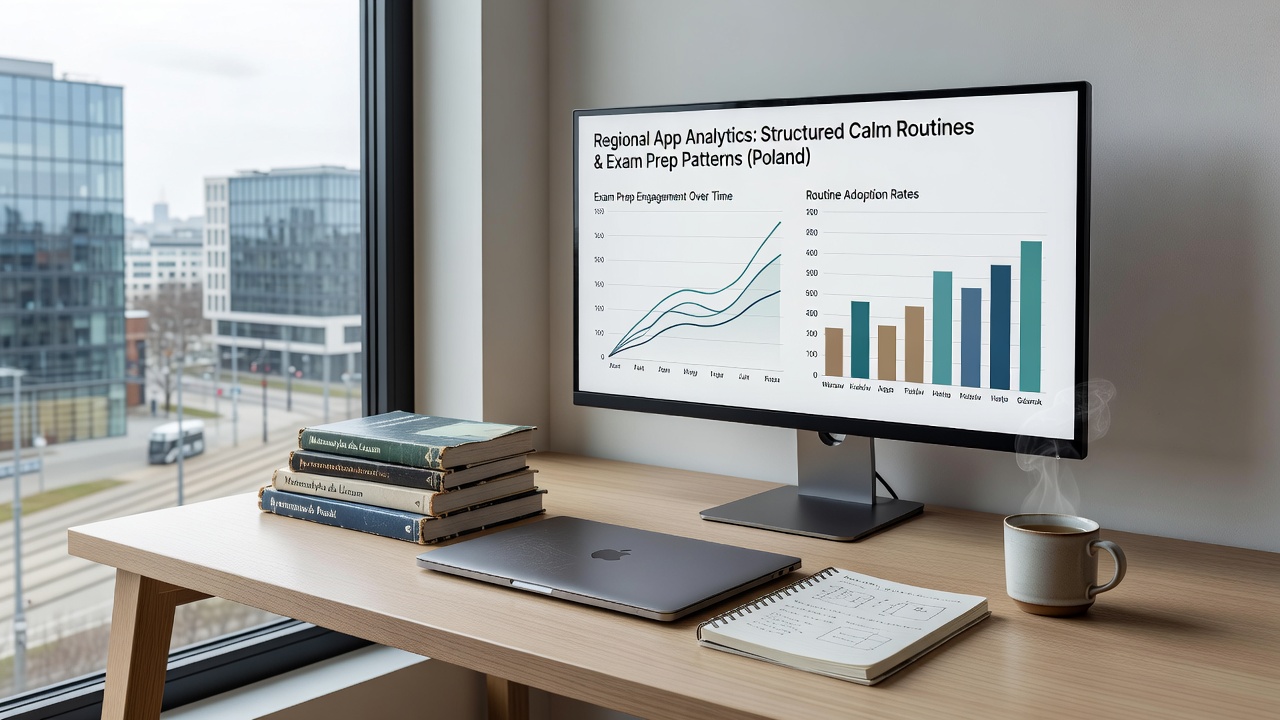
Figures reveal that students who completed at least one structured calm session before beginning revision blocks extended their focused study intervals by measurable margins compared with peers who skipped such routines entirely. In parallel, completion rates for practice assessments rose among those maintaining consistent calm integration, suggesting a link between preparatory calm practices and sustained attention during mock testing phases. Observers note that these trends held steady across different vocational tracks even though baseline study habits varied by trade.
Observed Shifts in Exam Preparation Patterns
Patterns extracted from the analytics indicate that calm routines often served as transition tools between different study modes, such as moving from theoretical reading to hands-on simulation exercises common in vocational curricula. Learners who scheduled these routines at fixed intervals throughout the day tended to log fewer interruptions and showed steadier progress toward curriculum milestones. Data further shows that evening calm sessions correlated with improved next-day recall during quick review quizzes, whereas morning sessions aligned more closely with longer block study sessions that incorporated both reading and practical drills.
Regional breakdowns uncovered additional nuances: learners in Silesian industrial programs displayed higher uptake of short, app-guided breathing segments integrated between workshop shifts, while those in Pomeranian hospitality courses more frequently used longer guided sessions before written theory tests. Such differences appear tied to the daily rhythms of each vocational pathway rather than broad demographic factors, and analysts continue to track whether these localized preferences persist into subsequent exam cycles.
Links to Broader Educational Research
Comparisons with international vocational training studies place the Polish findings within a wider context, and reports from the European Centre for the Development of Vocational Training outline similar attention-management benefits when structured calm elements appear in apprenticeship programs across EU member states. One analysis covering multiple countries found that embedding brief regulatory practices into technical training schedules supported knowledge retention without extending overall program duration. Polish regional data aligns with these observations while adding granularity on how app-based delivery influences adherence rates among younger learners balancing school and workplace commitments.
Additional context comes from education policy documents published by the OECD, which emphasize the role of self-regulation techniques in vocational pathways that demand both cognitive and procedural mastery. Analysts examining the November 2026 Polish datasets observed that learners who combined calm routines with spaced repetition features within the same applications recorded the strongest gains in practice test accuracy, reinforcing the value of integrated rather than isolated interventions.
Regional Variations and Emerging Trends
Variations across voivodeships suggest that infrastructure and scheduling flexibility play supporting roles. Areas with denser public transport networks showed higher midday calm session usage, possibly because learners could complete short routines during commutes between school and training sites. In contrast, more rural clusters recorded greater evening engagement, aligning with longer home-based study periods after work placements. These geographic distinctions underscore how external logistics shape the practical adoption of calm routines rather than altering their core influence on preparation patterns.
Continued monitoring through the remainder of 2026 and into following years will clarify whether these associations strengthen or shift as more applications introduce adaptive scheduling that responds to individual exam calendars. Current analytics already indicate that consistent users maintain steadier engagement curves across the weeks leading up to certification assessments, while intermittent users display more pronounced drops in both calm activity and study volume during peak stress periods.
Conclusion
Regional app analytics compiled through November 2026 demonstrate that structured calm routines correspond with distinct adjustments in exam preparation behaviors among Polish vocational learners, including extended focus intervals, improved practice assessment completion, and regionally specific timing preferences. The patterns emerge consistently across multiple trades and locations, supported by cross-referenced usage logs and aligned with broader European vocational research. Future data releases will determine how these relationships evolve as applications refine their features and as vocational programs integrate calm elements more systematically into daily timetables.